Video Evidence and Other Tech are a Rider’s Friend
There is a longstanding bias against motorcyclists. Insurers, other motorists, and even police seem to default to the idea of the “reckless biker” and automatically lean toward the idea that the motorcycle rider “had it coming.” When there are no witnesses, it can boil down to a he-said-she-said type argument and limit your motorcycle settlement.
Modern technology, however, is changing that narrative. Helmet cams, dashcams, the fact that everyone has a tiny camera and video recorder on their phone, and even the traffic cameras and security cameras at nearby businesses are all helping to show that sometimes it’s not the rider. Sometimes, it’s a negligent motorist. The Car Crash Captain explains how we’re helping motorcycle wreck victims in the Dallas, Texas area push back and find justice.
How the Narrative Works Against Bikers
There are some motorcycle riders who make the entire group look bad. They’re often caught on video, shared virally, and people who watch recall the handful of instances where they too saw a biker riding dangerously. The idea is formed that all riders are reckless, and the thousands of times when they saw safe riders are ignored.
In the past, it was harder to prove the motorcyclist’s innocence. If there were no witnesses, and if the rider died on the scene, there was no way to know if the motorist was at fault or the biker.
Insurance companies want to minimize their payouts. If there’s no clear evidence, they can minimize liability, and reduce the amount they have to pony up after a wreck.
But now that cameras are everywhere, the premise of “their word against yours” is minimized, and you, as a rider, can help minimize it even more.
How to Use Video Evidence to Turn the Tables for a Better Motorcycle Settlement
Cameras are cheaper than ever, easier to use, and can record vast amounts of data without the batteries dying, or storage filling up.
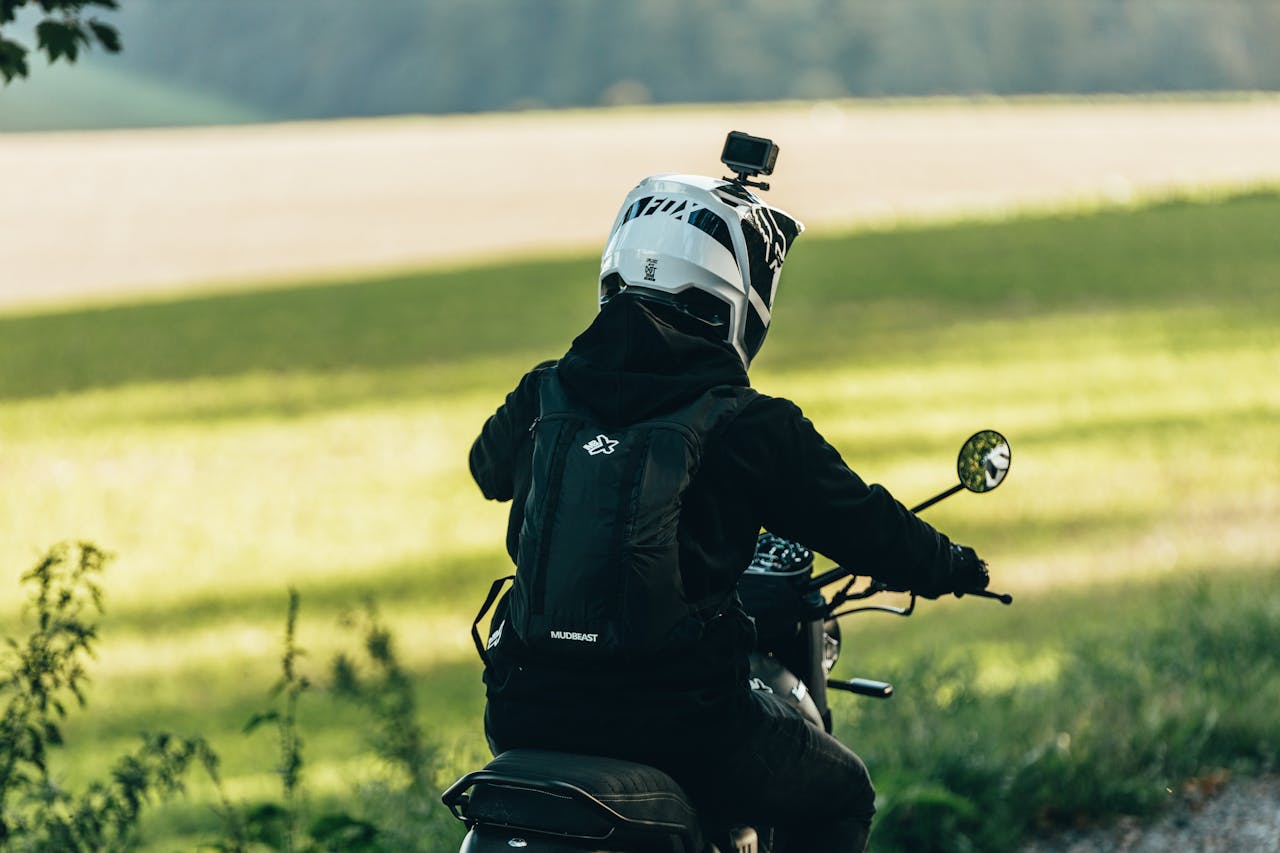
Installing a helmet camera can capture a 360 view of what you see, and the surrounding areas. Reviewing the footage, anyone can see road conditions, speed, light, and other vehicle behavior at an instant.
Many other vehicles have dashcams. These can provide alternate views of what happened. Third-party footage is especially credible as it’s unrelated to either part and can play a neutral role. The same goes for security cameras and traffic cameras that happen to be pointed at the accident when it occurred.
Technology can be your friend, or your enemy. GPS and timestamps in the metadata can corroborate your story, time of day, and even record location and speed at the time of the wreck.
If it comes down to it, one party might be caught skewing the truth when their story doesn’t match up to what the video evidence shows. The at-fault driver may claim you swerved in front of them, or the light was red, but the video can prove what really happened.
Does this Work in the Real World?
Fortunately, courts are generally accepting of traffic, helmet, and dashcam evidence. And it helps the injured party to elevate a small settlement, to true justice.
Take, for instance, the case of Matthew Rada. Mathew was riding on Interstate 405 in Southern California. This highway is one of the busiest in the country, and has its share of wrecks. In Matthew’s case, a Kia was traveling in the carpool lane and exited randomly without using their signal. They collided with Matthew sending him flying into a flatbed truck and then skidding along the pavement. He suffered multiple broken bones and required extensive surgeries.
Following behind the Kia was another motorcyclist who had a helmet camera rolling. The entire event was caught on video, and as a result it was very clear that the Kia driver acted negligently. Ultimately, Matthew was awarded a motorcycle settlement of over $21 million for the trauma he endured. Read all about it, and watch the helmet camera footage.
These events are happening more and more often as the population increases and the number of vehicles on the road also increases. Fortunately, video footage is expanding rapidly too.
What to Do After a Wreck and How Herbert Law Group Helps Victims
How do you protect yourself on the roads? It’s a few simple steps to ensure you’re not going to be down and out if you’re injured.
Always ride with a working helmet camera. Invest in one that is high quality so it won’t be ruined in a wreck, and the footage is clear even with rapid movements. Keep the timestamp and GPS data recording on the device.
Immediately after the crash back up the video footage. Keep at least 2 hard copies (on the computer and on the SD card) and back it up to the cloud. Corroborate your video footage with still images of the scene as well (if possible, if you’re severely injured, obviously this won’t be possible).
Contact Herbert Law Group right away. We’ll hear your story, preserve the evidence, and ensure that insurance companies are dealt with properly. In the end, your motorcycle settlement meets your needs.
If you have been injured, or a loved one was killed, in a motorcycle wreck here in North Texas, let’s talk about what happened and come up with a plan. All it takes is a phone call to our offices in Richardson, Texas at 214-414-3808. Or, you can fill out the contact form on our site, and we’ll reach out to you.