Road Rash is “Just a Skin Injury” that Changes Lives Forever

Road Rash after a Texas motorcycle wreck

It’s More than Road Rash; It’s a Debilitating Disability

Imagine the scenario in the emergency room after a motorcycle rider is thrown from his bike.  The ER doctor comes with the good news: no broken bones.  There’s no traumatic brain injury, no spinal cord damage, and all the x-rays look fine.  It sounds like a miracle, because we know that TBI and spinal cord damage at highways speeds is almost inevitable.

But as the nurse starts to cut away at the clothing, a different story appears.  Large portions of skin have been scraped away completely.  Dirt, oil, gravel, and asphalt are deeply embedded in the skin.  It’s cleaned, and treated for triage, but over the coming weeks the rider is in and out of the hospital for surgeries, skin grafts, and wound treatment.

Months later, he still can’t work.  Years later, the scars are more than superficial.

When people hear “road rash” they think of the skinned-up knee you get when you fell while running down the street as a kid.  Maybe even something a bit more severe like falling off a bicycle and having cuts and bruises.  The Car Crash Captain, from offices in Richardson, Texas, explores why trauma surgeons know better when they hear about an incoming motorcycle accident victim with severe road rash.

It’s More than a Scraped Knee

Have you ever been outside, usually in the summer, and later that day your skin was red and sore?  You got a first-degree burn – a sunburn.  Road rash has a similar scale when it comes to severity from superficial to life threatening.

First-Degree Road Rash – The mildest form of road rash really only affects the outermost layer of skin.  This is what you suffer when you fall off your bicycle, or go down on one knee on the carpet.  The skin is red, maybe bruised, a little scraped.  Most of the time there’s no deep breaks, and often very little blood.  Home treatment is the answer with antibiotic ointment and a bandage.  Rarely does it scar.

Second-Degree Road Rash – When the tears go deeper than just the skin and dig into the sub-layers.  Second-degree road rash has visibly broken skin, swelling, and often a lot of bleeding.  Wounds are likely embedded with dirt and gravel, and they feel hot to the touch.  Pail level is severe due to exposed nerve endings in deeper layers of skin.  Treatment requires professional cleaning and care or scarring and risk of infection are severe.

Third-Degree Road Rash – In almost any motorcycle wreck where the rider has exposed skin, he or she will experience the worst type of abrasion.  Multiple layers are skin are shredded, muscle and fat tissues are damaged, and in severe cases bone can be exposed.  It’s often not as painful as second-degree because the nerves have been completely destroyed – this isn’t a good thing because complete healing is impossible.  Treatment requires intense medical attention, infection is likely and hospitalization is required.  Surgical debridement (removing dead, infected, and damaged tissues) is followed by extensive skin grafting.  Permanent disfigurement is inevitable.

For a rider that is hit on the highway, they will almost certainly suffer third-degree road rash.  If treatment isn’t soon, this “scrape on the knee” can be fatal.

How’s it look in real life?  Suppose a construction worker suffers extensive road rash on his dominant arm.  After being out of work for months, the skin has healed, but the nerve damage is persistent.  Simply gripping his tools sends shooting pain through his entire arm making it impossible to continue his career.  No broken bones and a “miraculous survival” have changed his life forever.

Road Rash Complications Create Ongoing Problems

The big issues with road rash, though, aren’t the injuries themselves.  At least not initially.  And that’s because roads are filthy.  They’re covered in tiny shreds of tire rubber, gasoline, oil, animal waste, chemicals, metal fragments, dirt, gravel, and asphalt.  You don’t have to be a doctor to know that any of those embedded under the skin is going to create lasting problems.

Even properly treated wounds can become infected.  And infections can lead to much worse and more painful complications that cause extended hospital stays.

And that’s just the beginning.  Surgeries are required to repair damaged tissues.  When skin and muscle have been shredded away from the body, the doctors can’t just stitch it shut.  Skin grafts (and sometimes muscle grafts) are necessary.  The doctors have to take tissues from other areas of the body, or from a donor corpse, and re-create and re-build the damaged areas.  Almost certainly the victim has multiple surgeries – every one of them risking infection and complications.  When they’re finally done, they have intense and permanent scarring.  Not cosmetic blemishes, scars that make it difficult to function.  Restricted movement, chronic pain, and limited mobility.

The result is a motorcycle road rash victim that can hardly turn his or her head without intense pain.  Even with physical therapy, the pain and reduced movement might linger for years or even a lifetime.

Or it’s a welder that has road rash across both hands.  The skin heals unevenly and is now extremely sensitive to heat, and chronic pain means that career is over.

Or it’s the athlete that has third-degree road rash to one leg.  Surgery after surgery make it structurally sound, but it will never function optimally again.  Running competitively is no longer possible; an entire identity stripped away.

Insurance Companies Undervalue Road Rash Injuries

It’s “just an abrasion,” right?  That’s what the insurance company sees.  They hear “road rash” and they think of skinned knees and a little bit of pain as the skin grows back.  They don’t think of:

  • Surgeries
  • Skin grafts
  • Lost wages
  • Future treatment
  • Physical therapy
  • Permanent disfigurement
  • Chronic pain

And they offer a settlement that might cover the hospital bills for now, but they’re not going to be close to adequate to cover future treatment, rehabilitation, and mental anguish that comes with an identity that has been completely stripped as the skin and flesh were torn from the body.

The broken bones show up on an x-ray; the long-term impact of scarring from motorcycle accident road rash doesn’t.

Herbert Law Group Knows the True Costs

Surgeries, pain, and permanent limitations need to be compensated.  How do you put a value on them?  If you’ve never been in a Texas motorcycle wreck before, you probably haven’t done a deep dive into this.

And you shouldn’t have to.

Herbert Law Group already has.  We know how compensation works.  We know what negotiation tactics are most effective.  And we know how to show those insurance companies that their settlement offer is way too low for the injuries, pain, and suffering that you’ve sustained.

We’ll make sure you find justice.  But first, we need to know what happened.  Whether your wreck occurred in Dallas, Frisco, DeSoto, Arlington, or anywhere in the area around the DFW Metroplex we’re on your side.  So, give us a call at 214-414-3808 and we’ll have a free conversation on how to get started.  No time for a call right now?  Fill out the contact form, and we’ll reach out to you.

Lane Changes on a Motorcycle have Become Death Sentences

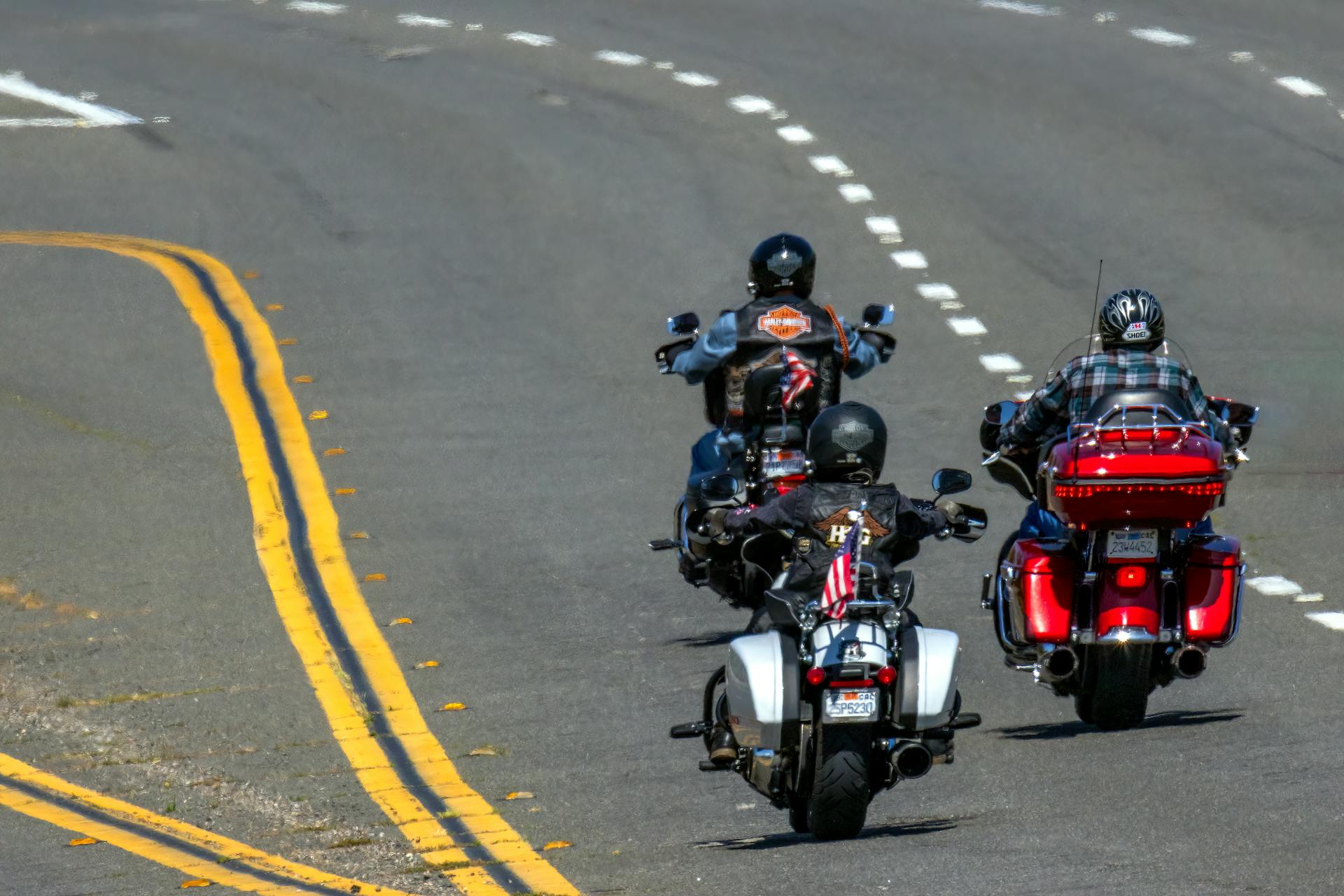
personal injury lawyer helps with motorcycle lane changes accidents

Texas Motorcycle Riders Are at Risk While Riding

If you ride, you know the feeling all too well.  You’re cruising down the highway, the wind in your face and the feeling of the open road.  You’re holding your lane and suddenly a massive SUV drifts over like you simply don’t exist.  And truth be told, for a lot of modern vehicles, you practically don’t.

In the late 1990’s America decided that SUVs and trucks needed to be bigger.  In the last decade, or so, the behemoths got even more gargantuan.  Modern trucks and SUVs have become rolling blind spots, and distracted drivers – combined with giant pillars, oversized mirrors, touchscreen displays, and just pure laziness – have paved the way to motorcycle riders paying the price.

From our offices in Richardson, Texas (where we serve the greater Dallas-Fort Worth area), the Car Crash Captain is looking into just how bad it has gotten for riders and the side-swipe-lane-change wrecks they are seeing.

Modern Vehicles are Bigger and Harder to See Out Of

It’s not your imagination, nor is it just paranoia.  One of the byproducts of massive SUVs and trucks is severely reduced visibility.  A study done by the Insurance Institute for Highway Safety found that forward visibility has declined as much as 58% in some of the most popular SUVs on the roads today.

Combine that with the fact that SUVs and trucks are more popular than ever.  Ford, for instance, no longer even makes cars (aside from the iconic Ford Mustang), opting to pour all of their resources into SUVs and trucks.  Modern safety designs in these vehicles (such as A-pillars, mirrors, and taller hoods) have all led to reduced visibility.  Combatting this visibility issue, most vehicles are now using sensors and cameras to alert the driver to a potential danger.

Less visibility, and more reliance on tech that could fail, means motorcycles get lost in the blind spots and are the victims of hasty lane changes.  Drivers used to SMOG (Signal, Mirror, Over-the-shoulder, Go!) before changing lanes.  Now they trust a little blinking light as they pilot a six-thousand-pound living room down the highway.

Lane Changes Have Become More Dangerous for Texas Riders

Motorcycles are already harder to detect because of their size and speed perception.  Now it’s getting even worse and a blind spot crash happens fast and violently because

  • Higher speeds on the interstate
  • Aggressive driving
  • Oversized vehicles
  • Distracted driving
  • Over-reliance on fallible technology

It’s not just bad drivers.  It’s a roadway environment that has become increasingly hostile to vulnerable riders.  When the driver of the SUV is about to miss their exit and hastily changes lanes, smashing into a motorcycle rider, they end up with a dented quarter panel.  The rider ends up having their skin torn off as they slide across the asphalt wondering if they’ll ever be able to walk normally again.

Insurance Companies Will Blame the Rider

And then, enter the insurance companies.  As we know there’s already a bias against motorcycle riders who automatically are blamed without regards to what actually happened.

When you’re on two wheels, you’re stereotyped as reckless.  Many insurance companies automatically assume you were speeding, or lane splitting, or overall, just being too aggressive while riding.  If they can’t pin any of those on you, it’s claimed that you, “failed to avoid the wreck.”

Meanwhile, you’re dealing with catastrophic injuries, surgery after surgery, missed work, and permanent trauma.

Riders are expected to survive a road filled with invisible blind spots, distracted drivers, and oversized vehicles.  Meanwhile the insurance companies are already preparing to cast blame on them before the ambulance has even left the scene.

Herbert Law Group Helps Texas Motorcycle Accident Victims

If you are the victim of a motorcycle wreck, the last thing you want to do is argue with an insurance company that’s bent on proving you were reckless.  All that stress is slowing your healing, and causing more trauma on top of that which you’ve already experienced.

Let Herbert Law Group take that stress away.  We have the experience to put the insurance companies in their place, and to fight for maximum compensation for you.

Herbert Law Group helps motorcycle accident victims all around the area, from Arlington to Allen; Grapevine to Pleasant Grove, because wrecks don’t just happen downtown.  To help you, we need a quick phone call to figure out what happened and how we can fight for you.  Call our offices at 214-414-3808, or fill out the contact form on our site, and we’ll be in touch for your free initial consultation.

Texas Drivers Love to Blame the Motorcyclist

drivers blame the Motorcycle rider for the wreck

Crash Data Shows Most Motorcyclists Aren’t to Blame

Everyone who rides in Texas knows the feeling.  You’re heading straight, minding your business, keeping an eye out for hazards, and suddenly a driver turns left directly into your path.  Somehow, after the wreck, the focus isn’t on how distracted that driver was.  Rather, the focus is about what you, the motorcyclist, could have done differently.

Texas drivers and insurance companies love to lean into the stereotype that riders are reckless.  But the crash data tells a different story, and many of the worst motorcycle wrecks in the greater Dallas, Texas area, are because the driver failed to see an oncoming motorcycle.  The Car Crash Captain digs in to see what exactly is going on.

“I Didn’t See the Motorcycle”  

There’s an argument that at-fault motorists love to lean into.  They claim they “never saw” the biker.  The idea is simple: their goal is to minimize their liability.  If the biker was hiding, or zooming in and out of traffic, or perhaps somehow camouflaged themselves, the driver doesn’t maintain as much fault… right?

The fact remains that “I didn’t see him” is a weak excuse.  Of course, the driver didn’t see the rider, if they wrecked with a truck or another car it would likely be the exact same excuse, “I didn’t see them.”

The issue isn’t the excuse.  The issue is that left-turn collisions remain the most common way bikers die on the road.  Bikers go out of their way to remain visible, but the increasingly distracted driver filters out anything that isn’t a car or a truck.

And that has led to some staggering statistics.  Some studies show that these crashes account for around 26% of fatal bike wrecks; other studies show that stat as closer to 40%.

Insurance Companies Treat Riders Like the Problem

The issue is compounded when the idea that if you don’t see someone, it’s not your fault, is validated by the insurance company.  If you turned left in front of a truck, that you “didn’t see,” that would be careless driving.  But if you do that to a motorcycle, it’s just a big oopsie.

The adjusters come into these wrecks assuming the worst.  The preconceived notion is that the motorcycle rider was speeding, riding recklessly, or weaving between the lanes.  This set the motorcycle accident victim up as the bad guy before any evidence is established.

Part of it is the very nature of riding a motorcycle.  Getting on two wheels, without a cage to protect your body, is inherently more dangerous.  Often adjusters, juries, and even judges automatically assume that those who ride are risk takers, and likely did something risky that resulted in the accident.

The irony is palpable.  Riders take the risk as they put nothing but a layer of leather clothing between themselves and an impact with the pavement.  Yet they’re treated as the reckless party before an investigation even starts.

When Drivers Make Mistakes, Riders Pay the Price

That risk wouldn’t really be a risk for the experienced rider if it wasn’t for the negligent motorist.  But because there are people out there not paying attention, every time a person hops onto the motorcycle, they know that a “small mistake” by another driver can lead to:

  • Traumatic Brain Injury
  • Spinal Cord Damage
  • Skin Grafts
  • Amputations
  • Permanent Disability
  • Death

Motorcycle crashes are almost never “minor wrecks” or “fender benders.”  They have a serious impact on the rider’s way of life, their ability to earn an income, or even function independently.  In a car wreck, people talk about dented bumpers and the inconvenience of repairs.  In a motorcycle wreck, families talk about surgeries, rehab, and quite often a remembrance of the amazing person taken from this world far too soon.

Herbert Law Group Pushes Back Against Bias

Unfortunately, these wrecks are going to continue to happen.  Until vehicles become much “smarter” we have to rely on motorists who don’t watch where they’re going and ruin other lives along the way.

If you’ve been involved in a bike wreck, or a loved one was killed in a collision with an inattentive motorist, then we should talk.  The insurance company doesn’t have your back, but Herbert Law Group does.

Call our offices at 214-414-3808, and let’s have a conversation about what happened so we can discover what needs to happen so you can find justice.  No time to call right now?  Simply fill out the contact form and we’ll get started on your free case evaluation.

Driver’s Don’t ‘Miss’ Motorcycles; They Ignore Them

I didn't see them motorcycle wreck lawyer Texas

The Common Excuses Aren’t Any Good

Most motorists will say the same thing after being involved in a motorcycle wreck, “I just didn’t see them.”

It sounds innocent, as though it’s unavoidable.  It’s as if the crash was just one of those things that happens on a busy road.  The problem is, it’s not.

Motorcycles aren’t invisible.  They’re smaller than other vehicles, but they’re not just something that pops up out of nowhere.  They’re not ghosts.  They’re not impossible to see.  And that’s what leads into the biggest problem with motorcycle wrecks: drivers are let off the hook because they just didn’t see the biker.  The Car Crash Captain explores this “excuse” and why Herbert Law Group, located in Richardson, Texas, isn’t buying it.

“I Didn’t See Them” Is the Driver’s Failure

Driving isn’t a passive act.  When a driver receives their license, they agree to follow the Texas transportation code, which (in part) states they will maintain “proper lookout.”  It doesn’t say, “Proper lookout, except for smaller vehicles, that oopsie, you might not see them.”

It means that you must:

  • Ignore distractions (including phones, screens, passengers, and anything else that takes your mind or eyes off the road).
  • Beware of blind spots.
  • Don’t drive in a rushed manner.
  • Don’t drive in a lazy manner.
  • Be diligent or aware.

Suppose you’re driving and a child is playing in the street.  You run the kid over.  Would you go before the judge and say, “Oops, I didn’t see him!”?  That would never hold up – nor should, “I guess I just didn’t see them” when it comes to motorcycle wrecks.

Motorcycle Are Ignored, Here’s Why

So why do so many drivers, “not see” the motorcycles?

In part, because we’ve been conditioned to look for larger vehicles instead of motorcycles.  Motorcycles represent less than 4% of vehicles on the road, so we are naturally going to be watching for the majority of vehicles.

There’s also the fact that most people are really bad at judging speed and distance.  Motorcycles, in part due to their size, seem like they’re farther away.

Left-turn crashes, where the motorist turns left, crossing the lane of traffic, and collides with a motorcycle, are the most common motorcycle wrecks.  All because drivers aren’t looking for motorcycles, and even if they do see them, they believe they’re farther away.

Motorcycles are harder to see than other vehicles, but that doesn’t mean drivers don’t have to train themselves to watch for them.

How to Handle a Motorcycle Crash

Insurance companies love to lean heavily on the “I didn’t see them” narrative.  Because it has this subtle shift of blame from the driver to the rider.  It sparks that little bit of doubt that, “Maybe the motorcycle rider should have done something different, better, or more complete.”  And without other evidence, it can get muddled.

This is why oy need an experienced motorcycle wreck lawyer on your side.  One that understands how to argue that the rider did nothing wrong, they followed all safety procedures, had the safety and visibility equipment, and that it was indeed the other driver’s fault.

Herbert Law Group Finds Justice for Motorcycle Accident Victims

Because “I didn’t see them” is still a common excuse, and because the insurance companies continue to buy it, that’s exactly why you need Herbert Law Group.  We serve the greater Dallas, Texas area, and we have helped a lot of motorcycle accident victims push back when the insurance company isn’t playing nicely.

Let’s come up with a plan on how we can help you receive justice after your wreck.  First, we need to know what happened.  Call our offices at 214-414-3808, or fill out the contact form on our site.  Once we have our free initial consultation, we can determine what needs done to maximize your compensation.

Why You Might Feel Fine After a Motorcycle Crash

Feel fine after a Texas motorcycle Wreck

Feeling Fine Doesn’t Mean Not Injured

Our bodies and brains react to stress and trauma in a remarkable way.  Even in low-risk situations, the adrenal glands (located on top of the kidneys) will dump adrenaline into the blood stream.  Adrenaline, or epinephrine, increases the heart rate, drives up blood pressure, relaxes the lungs, causes a massive dump of glucose providing energy, dilates the pupils for enhanced vision, and suppresses the feelings of pain.

If you’re involved in a motorcycle crash in Texas, you don’t get a choice if the body releases adrenaline – it just happens.  In this article, the Car Crash Captain explains what’s going on in your body, why you might feel fine, and how the insurance companies are going to use that against you if you don’t have a great motorcycle wreck lawyer on your side.

Fight-or-Flight Hides Injuries for a While

When in trouble, your brain will prioritize survival over pain.  When the wreck happens, your brain instantly tells the adrenal glands to release the epinephrine.  When that happens, your body goes into overdrive with an increased heart rate, intense focus, and the big thing that we want to focus on today: reduced sensation to pain.

After your body experiences that adrenaline dump, the pain isn’t just ignored.  It’s actually chemically suppressed.  Those endorphins from the adrenaline act as a natural opioid, and the signaling pathways that tell your brain the body is in pain are altered.

The result is that you may be functioning normally while you’re injured.  Blood has been redirected to your muscles to help you fight the “attacker” or run away from the danger.  The injuries are still there, but your brain (with the help of adrenaline) has told the body, “Eliminating the threat is the most important thing right now, injuries can be dealt with later.”

But you are still injured even though you “feel fine.”

When Will Pain and Symptoms Show Up?

Eventually, the adrenaline will leave your system.  When the threat has passed, your hormone levels will fall and the pain will intensify.  Blood flow stabilizes as escaping isn’t prioritized.  Eventually the inflammation sets in and peaks after the crash, not during it.  Swelling, tissue damage, pain, and stiffness increase over the next 24 to 72 hours as you start to realize there are injuries that must be addressed.

Often, the day after the crash is worse than the crash itself.

Concussions and cognitive injuries show up later, soft tissue injuries worsen as inflammation builds, and nerve irritation takes time.  In the days immediately following the crash, the reality of the injuries sets in.

What You Should Know about Feeling Fine after a Motorcycle Crash

The most important thing to keep in mind:

Delayed symptoms are medically normal; they’re not suspicious.

Hours, or even days, after the crash is when the full effects are realized.  And that’s what the insurance companies will try to use against you.  They’ll make claims that you didn’t go to the ER right away, so how bad could it be?  They use your own words against you if you said you “feel fine” when the adrenaline is surging and a witness asks how you’re doing.  They’ll downplay the injuries because you didn’t feel horrid immediately after they were incurred.

Insurance companies rely on misunderstanding, not medical reality.

Herbert Law Group Helps You Recover

This is one of the many reasons you need an experienced Texas motorcycle wreck lawyer on your side.  From our offices in Richardson, Texas, we help victims throughout the Dallas and Fort Worth areas.  We know how to push back against the insurance companies, we know that pain tends to come days later, and we know what compensation you’ll need for your injuries.

What we need from you is to learn what happened.  That starts with a free phone call that fills us in on the details.  Call our offices at 214-414-3808, or fill out the contact form on our site and let’s develop a strategy to find you justice.

What a Brain Scan Doesn’t Tell You About Concussions

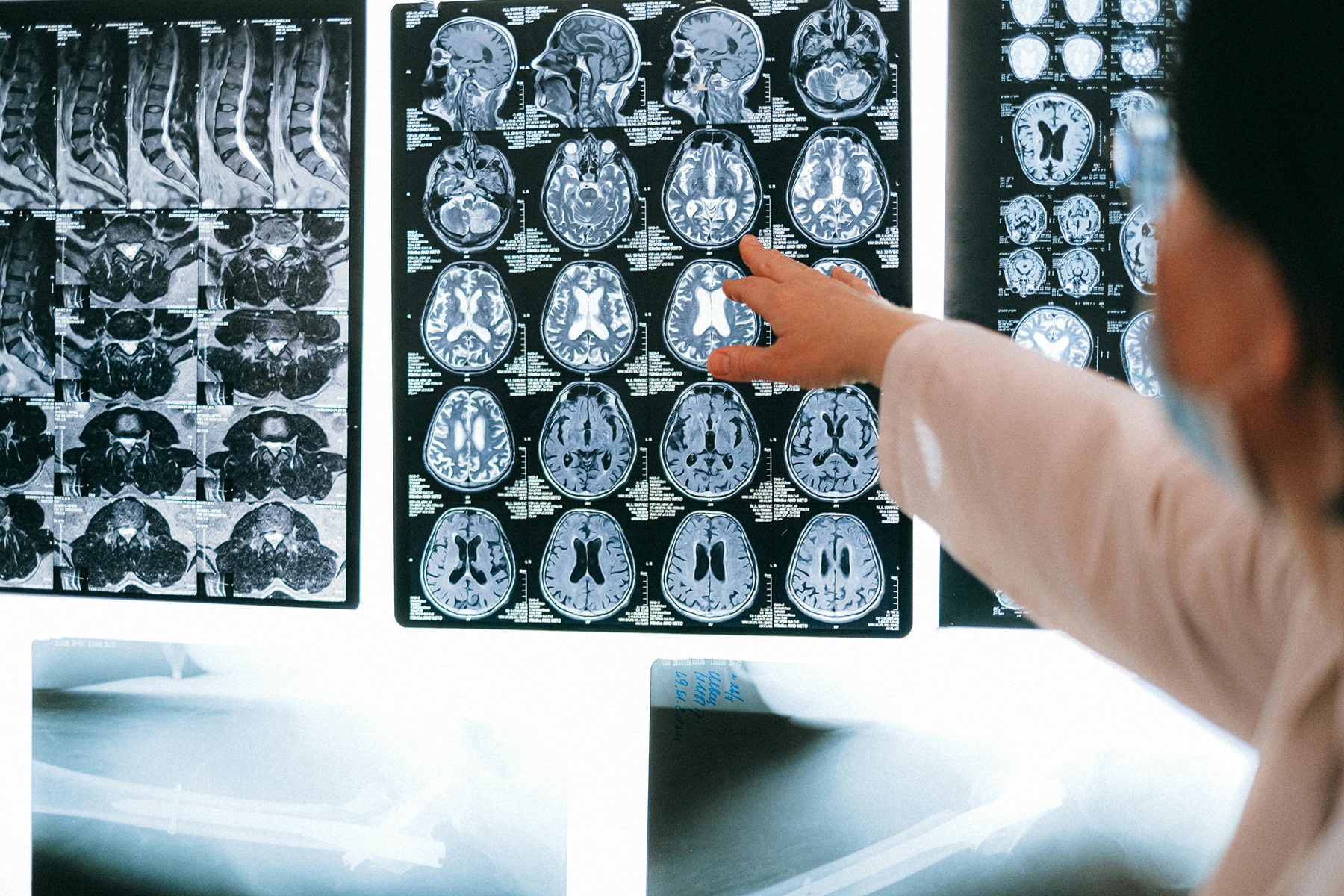
TBI Traumatic Brain Injury after a texas motorcycle wreck brain scan

Concussions After Motorcycle Accidents are Common

Wearing your helmet when riding is a highly effective way to prevent major injuries and death.  However, a helmet is designed to help prevent skull fractures and fatal brain injuries; it helps reduce the risk of concussion, but it doesn’t eliminate it.  In fact, after a motorcycle wreck, even when the rider was wearing a helmet, a concussion is still incredibly common.

There is, however, a bit of a gap in injury and treatment when it comes to motorcycle accidents, brain scans, and concussions.  Too often it leaves the rider with the false idea that everything is fine and normal, when there has been damage that needs to be addressed.  The Car Crash Captain looks into what the brain scan doesn’t tell you about concussions after a Texas motorcycle accident.

A Normal CT Brain Scan Doesn’t Mean a Normal Brain

Here’s the situation.  You’re involved in a motorcycle accident, and you were wearing your helmet.  You hit your head quite hard on the pavement, and the doctor orders a CT scan.  The scan comes back, and everything looks just fine.  The problem is, however, you don’t feel “just fine.”  You know something is off.

CT scans are great for detecting issues in the brain.  And when you have bleeding or structural damage, they can show exactly what’s going on, and how severe the issues are.  If damage or bleeding isn’t fixed right away, it can lead to major issues, and most likely death.

Concussions aren’t structural injuries; they’re functional ones.

A functional injury is when there is disruption between brain cells.  The microscopic neurons aren’t firing quite right, and that won’t show up on a brain scan.  Concussions, will still disrupt your life, and you deserve compensation even when the CT scan looks clear.

A Realistic Recovery Timeline

Most mild TBIs will improve within 2-4 weeks.  That doesn’t mean all of them will clear up in that time period.  In fact, some can last several months and longer.  And that’s because post-concussion syndrome (PCS) is a real thing, and quite well documented.  Without getting into it too deeply, PCS is when the concussions symptoms linger for far longer than one would expect.

Even at the time of injury, symptoms are delayed.  Inflammation doesn’t set on instantly.  We know that from just about any injury – there’s that sharp, acute pain at the time, but later that’s a dull and throbbing pain.

With a brain injury, it’s even worse.  Cognitive fatigue sets in, emotional symptoms can creep up, and what seemed fine initially now has severe symptoms.

Wait, cognitive fatigue?  Yes, it’s a real thing, and it’s not just stress.  It shows up as memory lapses, slower processing speed, sensitivity to light and noise, and executive dysfunction (difficulty making decisions).  It can linger for a long time, and often victims don’t even realize it’s an injury that they should be compensated for.

Invisible Injuries are Undervalued by Adjusters

Insurance adjusters focus on the visible factors.  How much will it cost to replace the motorcycle, how much did you lose in lost wages, how much were the medical bills, and so on.  They even prioritize what they can see – including brain scan images (that as we know don’t show the entire picture).  What they minimize are those invisible injuries.

And they certainly don’t take into account that your recovery likely won’t look like other recoveries.  They believe a mild concussion should heal up in 2 weeks.  But recovery time from a concussion includes:

  • Age
  • Prior concussions
  • Severity of impact
  • Access to rehab and treatment
  • Medical history

Settling too early can minimize your compensation, and make you feel like justice wasn’t served.

Herbert Law Group Helps You Receive Justice

We are here to help you find justice.  Our motorcycle accident lawyers know what to look for, how to push back against insurance companies, and we have a strong portfolio of clients we have helped.

In short: we know what to do, because we’ve done it a lot.

What we need is to get to know you.  Call our Richardson, Texas law offices at 214-414-3808 and we’ll have a free conversation to determine how we’ll help.  No time for a call right now?  Fill out our contact form and we’ll reach out to you.

How Long Common Motorcycle Crash Injuries Take to Recover

Motorcycle Crash Injuries take a while to recover

Motorcycle Crash Injuries Take Time to Heal

When you ride your motorcycle, you’re exposed.  You have little protection between you and the rest of the world, and that’s exactly why you love it.  The wind in your face, the unobstructed views, and the feeling of freedom.  Whipping down the highways around Dallas, Texas is exhilarating and freeing.  However, not all motorists are watching out for you.  If you happen to wreck, you’re going to have injuries that can run the gamut from minor to severe.  Let’s dive in as the Car Crash Captain explains how long it will take for common motorcycle crash injuries to heal.

Different Injuries Require Different Timelines

From road rash to traumatic brain injury and everything in between.  Let’s look at some of the common injuries, and how long they’ll take to heal.  This isn’t just a “best guess” scenario either, this is backed by medicine and biology because you can’t rush healing.

Soft Tissue Damage and Road Rash

Scrapes abrasions, and lacerations are going to happen to just about any exposed skin.  Minor abrasions should heal up in about a week or two.  Moderate road rash that gets through the first couple layers of skin can take a few weeks to a month or more.  Severe road rash, that is, something which rips through the skin and gets down to the muscle or even the bone, can start to look better in a month or two, but you’ll deal with issues for a full year at least as scars mature and muscles rehabilitate.

Just because the visible damage looks better, the injury is not healed.

Broken Bones and Fractures

The impact can snap and crack bones.  We all know that broken bones take casts and at least a few weeks to heal.  But there’s more to it than that.

Simple fractures should take about six weeks to three months to heal up.  The body is quite good at repairing bones.  However, complex breaks (the kinds that happen in a severe wreck) can take multiple surgeries and hardware to repair the bones the right way.  These usually take a minimum of three to six months to heal, and often much longer to regain strength and full functioning.

Even when the bone has healed, rehab and functional recovery can last for years after the injury looks better.

Head Injuries

Wearing your helmet is the number one way to prevent traumatic brain injury.  However, these things can still happen.

Mild TBI, such as concussions, can feel better in two to four weeks.  Many of them have symptoms dissipate after around three months.  Full recovery, though, can take up to a year.

Moderate and severe TBI require much longer healing times.  Several months would be a fast paced healing, while most people who suffer from severe TBI will require years of rehabilitation, and often will never fully recover.

Traumatic Brain Injuries are highly individualized.  Some people recover much faster than others, and some can recover from what looks like a permanent injury.  The bottom line is, however, that this “invisible” injury is one that’s highly overlooked by insurance companies.  Even when it’s acknowledged, it’s common for them to downplay just how severe it really is.

Why These Healing Timelines Matter in Your Injury Claim

The problem with filing an insurance claim is that humans tend to look at pain level, visual damage, and loss of functioning.  If your injury looks like it has healed, and your pain is largely gone, you’re good to go, right?  Not so fast.  Being healed isn’t enough.  Instead, we have to take into account imaging, doctor notes, therapy progress, and functional limitations over time.  If the bandages are off, but you can’t live life how you once did, shouldn’t you be compensated?

Furthermore, symptoms can be delayed or change over time.  This is especially true with brain injuries.  At the time of impact, you might feel okay.  But if your head is filling with fluids, that could take a while for symptoms to show up, and then if not acted upon right away, furthering damage can occur.

Rehabilitation time shouldn’t cost you anything.  Physical therapy, occupational therapy, speech and cognitive rehab aren’t just things that are nice to have.  They’re necessary parts of a full recovery, and must be accounted for in the claim.

What Won’t Hurt Your Claim after Motorcycle Crash Injuries

Being injured is scary.  Healing is also scary.  A lot of victims look at what happened, and how they’ve healed, and they’re worried about their claim because they seem to have healed up no problem. Here’s the truth though.

Truth – Some injuries don’t physically hurt, but severely impact your quality of life.

Truth – Just because you’ve “healed” quickly doesn’t mean rehabilitation won’t take much longer.

Truth – You can fully recover from many injuries; however, they still leave functional limitations, scarring, chronic pain (that comes up later in life), and emotional damage.

You Need Herbert Law Group to Maximize Your Compensation

You need someone that knows how long it takes, and what kind of recovery to expect.  You need Herbert Law Group to help you fight for what you deserve.  You shouldn’t wonder if the settlement will cover everything or if you’ll be stuck paying out of pocket.

Herbert Law Group, from our offices in Richardson, Texas, has helped a lot of motorcycle accident victims.  We know about the common motorcycle crash injuries, what it takes to recover, and the costs associated with them.  Armed with that knowledge, we will fight for you.

Let’s start with a free phone call where we learn what happened and figure out how we can help.  Call our offices at 214-414-3808.  Or, you can fill out our contact form and we’ll be in touch with you as soon as we can.

Mistakes that Will Hurt Your Motorcycle Injury Claim

Myths about a Texas motorcycle injury claim

And Myths that Won’t Make a Big Difference

We all know that there are some things that you might do or say that will hurt your motorcycle wreck claim.  Obviously we don’t want to admit fault (or even use language that could be twisted into admitting fault).  But there are a few more things you’ll want to be aware of so you don’t accidentally hurt your motorcycle injury claim.

But this list wouldn’t be complete if the Car Crash Captain didn’t dive into some of the myths that aren’t actually going to hold you back.  After you touch up on the mistakes to avoid, keep reading as your motorcycle wreck lawyer from Richardson, Texas lays it all out for you.

7 Real Mistakes that Can Hurt Your Injury Claim

These mistakes can genuinely harm you case; potentially derailing it completely.

Delaying Medical Treatment – Insurance companies will see that you didn’t get treated right away, and they can argue that your injuries weren’t actually sustained in the wreck.  Adrenaline can mask pain, so it’s important that you get looked at right away, even if you don’t think the crash was that bad.

Giving a Recorded Statement – After the wreck, insurance will want to get the facts (or at least their version of the facts) and offer a settlement quickly.  The at-fault driver’s insurance will want a statement from you, and they are trained to ask questions that can subtly shift the blame to you.  The only statement you need to give is, “I’m working with Herbert Law Group, please direct all questions to them.”

Admitting Fault – Sometimes you can admit fault on accident.  If you say something like, “I didn’t see them.” Or, “I was probably going a little fast.” Or, “He came out of nowhere!” you might set yourself up for a bad time.  Instead, stick to just the facts and let the evidence speak as to what happened.

Failing to Document – No photos, no witness, no proof.  If you’re injured to the point you need to be rushed to the hospital, you obviously can’t do a lot.  But if you’re able, get plenty of pictures and witness statements.  You’re already fighting bias; evidence is the equalizer.

Skipping Doctor Appointments – If you don’t go in for your follow-up it’s really easy to say, “You must have healed.”

Taking to Social Media – Until all is settled, stay off social media as much as possible.  A picture of you at the gym, out and about, or a comment like, “I got ran over, but I’m fine!” can undo months of work.

Not Talking to Herbert Law Group – Memories fade.  Evidence gets erased.  Deadlines matter.  As soon as you’re able, let’s get the process started so we aren’t left with an uphill battle.

We know what not to do, and by reading this you’re getting familiar with what to do if the unfortunate happens.  But there’s more.

Common Motorcycle Accident Myths that Won’t Automatically Ruin Your Claim

It’s not all doom and gloom.  There are some things you’ll hear often that are “claim killers.”  The reality is that they’re just myths.

If I wasn’t wearing a helmet, I don’t have a case.

There’s no foundation for this.  Helmet use could impact some damages, but the fault is still there.  If another driver caused the crash, they’re still liable for what happened.

Motorcycles are dangerous, so it’s automatically my fault.

The reality is that risk does not mean responsibility.  Drivers have the duty to watch for motorcyclists and share the road.

I wasn’t following the speed limit exactly.

If you’re speeding and you’re hit by someone else, you’re still hit by someone else.  Minor speeding doesn’t eliminate your claim, however, comparative fault might apply.  Compensation may diminish, but it’s rarely wiped out completely.

I didn’t take the ambulance ride, so my injuries aren’t serious.

As we mentioned before, adrenaline does crazy things to the body.  Riders will often decline EMS because they “feel fine,” have cost concerns, or just don’t want to ride in the ambulance.  The reality is that medical records determine severity, not the ambulance ride.

My bike was modified, so insurance won’t pay out.

Unless your modifications were illegal and directly caused the crash, those mods will have zero impact on the case.

I didn’t miss work, so I can’t recover much.

Compensation isn’t just lost wages and medical bills.  There’s pain and suffering, future care, and a diminished quality of life if your injuries cause permanent changes to your body.

Don’t worry about these myths; that’s why you work with a professional motorcycle wreck lawyer.

Get Help from Herbert Law Group

We’re in the business of helping victims recover compensation that will allow them to fully heal.  We’ll deal with the insurance companies, negotiate on your behalf, and maximize your claim.  All you should be focusing on is recovering from those injuries.

How’s this work?

It starts with a free phone call so we can learn what happened and form a plan to find justice.  Call our offices at 214-414-3808, and we’ll get started.  No time for a call right now?  No worries, fill out the contact form and we will reach out to you.

Herbert Law Group serves the Dallas area.  Whether you’re in Frisco, Fort Worth, or anywhere nearby, we’ll ensure you’re treated properly on your injury claim.

“I Didn’t See The Motorcycle” Might Make Your Motorcycle Wreck Claim Stronger

I Didn’t See The Motorcycle

Not Seeing isn’t a Legal Defense

After a wreck, when the dust has settled, one of the most common excuses after a motorcycle wreck is the claim that, “I didn’t see the motorcycle.”  Drivers use it and insurance companies will often try to fall back on this – as though the motorcyclist was intentionally trying not to be seen.  The problem (for them) is that not seeing isn’t a legal defense.  In fact, it could actually reinforce the idea that the motorist was being negligent.

Today, the Car Crash Captain, who serves motorcycle accident victims in Richardson, Frisco, Dallas, and the surrounding areas, is looking at what is really going on when a driver claims they didn’t see the motorcycle rider.

What “I Didn’t See the Motorcycle” Really Means

Looking at riders and motorists, we see that those on two wheels are often more attentive than other motorists.  The seasoned riders have become especially aware of their surroundings, traffic, and potential hazards.  Unfortunately, their level of awareness isn’t matched.  Drivers frequently don’t see motorcycles as they’re turning and changing lanes.

Legally, anyone operating a vehicle is obligated to be aware of what’s going on and follow basic traffic laws.  If a driver fails to see a motorcycle and causes a collision, that’s generally considered to be negligent driving.

Insurers, however, will try to argue that the rider was partially at fault (because they can often reduce the amount they have to pay if it can be proven that the rider is at least partly to blame).  However, just because the insurer says that doesn’t mean it’s true.  Good evidence (photos, videos, and witness statements) can show that it was indeed the driver that was negligent.

What Compensation do Victims Deserve?

Most riders don’t realize how much compensation they can actually get after a wreck.  This isn’t a get-rich-quick idea; it’s helping victims that have had their lives permanently altered.  Medical bills, lost wages, pain and suffering, future care needs, and compensation for a reduced quality of life are just a few of the disruptions that need paid for.  But it can be much more than that.

Such is the case of a grandparent in South Carolina.  It was March of 2019, the motorcyclist was traveling along the highway when a pickup truck pulled out in front of him.  The man braked hard and swerved to avoid the collision, but he couldn’t avoid the wreck.  Upon impact he broke his clavicle, femur, tibia, and fibula and had to be life-flighted to the hospital.

Multiple surgeries and extensive rehab allowed him to go home.  However, he was confined to a wheel chair for nearly two years and lives in chronic pain; he can no longer enjoy life the way he did before the wreck.  Ultimately he was awarded $4.45 million that will help with him and his legacy, but he himself says, “I worked my whole life to get to where I was and they took it from me… I just wish the guy would have seen me so I could keep living like I was before the crash.”

When negligence is proven, especially if it’s more than just a casual lapse in judgement, the compensation can be far more than what many people realize.

How to Maximize Your Compensation

To ensure you receive compensation that will help you continue to live a fulfilling life, you have to plan ahead to ensure your story is validated.

1 – Document Everything: If your injuries aren’t so severe that you need an ambulance, take a lot of pictures, video, and collect witness contact information.  This can help dispel the “I didn’t see the motorcycle” claim and build your case.  In a world where helmet cameras are relatively cheap, there’s no reason to not have one.

2 – Seek Medical Care: Hospital records will show that you are receiving treatment, and the doctors can validate your story that you can’t live a normal life after the wreck.  Keep your own journal of how you feel and your pain levels as well.

3 – Know What is Recoverable: Compensation isn’t just reimbursing you for medical bills and lost wages.  It also includes future medical costs, diminished earning potential, pain and suffering, emotional distress, and reduced enjoyment in life.

4 – Work with an Attorney: The insurance company is going to offer a quick settlement.  They’ll emphasize that you should take it or it could be reduced and they will try to pressure you into settling.  These offers are almost always less than what you deserve.  Working with Herbert Law Group we’ll handle the hard stuff, the heavy negotiations, and go to court on your behalf if it comes down to it.

Herbert Law Group Helps Motorcycle Accident Victims

Motorcycle riders are often injured because another driver failed to see them.  Whether they truly didn’t see them, didn’t pay enough attention, or intentionally just drove in front of the rider, the fact remains that you’ve been injured because someone else didn’t care enough to keep you safe.  And “I didn’t see you” isn’t a get-out-of-responsibility card.

We work with accident victims throughout Texas from our offices in Richardson.  If you’ve been injured, or a loved one was killed, then we need to talk about how we can help with the legal battle and maximize your compensation.  Call our offices at 214-414-3808, or fill out our contact form, and we’ll be in touch for a free conversation to determine our plan.

The Legal Implication of Motorcycle Modifications

Motorcycle modifications in Dallas Texas area wreck

How Motorcycle Modifications Could Impact Your Case

Motorcycle modifications are exploding in popularity.  Updating your ride to include louder exhausts, taller bars, LED lighting kits, suspension changes, performance tuning… the list goes on and on.  There is, however, a problem that has arisen with the popularity of these mods.  Insurance companies are denying, or minimizing, motorcycle wreck claims based on “improper” or “unsafe” modifications.

Many riders don’t realize that some mods can make the bike so it’s technically no longer street legal.  Some mods void warranties or violate insurance policy disclosures.  Often insurers will argue that the modifications contributed to the crash (even if it didn’t).

The Car Crash Captain, representing motorcycle wreck victims from Richardson, Texas and the surrounding areas, takes a look at what these issues are, and how you can protect yourself.

Why Mods Can Become a Legal Problem

If you’re a motorcycle accident victim, the insurance company is going to look for anything they can to shift the blame from the other driver to you.  The more liability they can put on you, the less they have to pay out.  So, they’re going to come at you with something like, “Your aftermarket modification made the motorcycle unsafe and contributed to the severity of the crash.”  They’ll use common tactics like:

  • Your exhaust was too loud and distracted the other driver.
  • Your ape hangers are over the legal limit and reduced your ability to see and steer.
  • Your non-DOT approved lights made you less visible and non-compliant.
  • You removed safety features and increased the danger on the roads.

Because Texas uses what is called modified comparative negligence these statements can make an insurance adjuster pause.  If the adjuster says that you were even 20% at fault, your payout drops drastically.

Texas Laws Regarding Motorcycle Modifications

The big problem is that most riders don’t know when they’re crossing the line and going from a fun mod, to an illegal upgrade.  And the changing laws don’t help the matter either.

Ape Hangers – There was a restriction on handlebar height, but that was repealed in 2015.  You can legally install tall bars, but the insurance company can still argue they reduce control.

Loud Exhaust – Texas doesn’t have a statewide noise limit, but there are federal laws that prohibit modifying exhaust systems that increase emissions beyond the EPA limits.  Aftermarket pipes often violate this, but it’s hard to enforce.  Insurers can argue that the bike was non-compliant and shouldn’t have been on the road.

Lighting Mods – LED accent lighting is legal, except when it flashes, uses red or blue on the front, mimics emergency vehicles, or is excessively bright.  It could be argued that the lights were a distraction to the other driver leading to the wreck.

Performance Mods – Most suspension and performance mods are legal, but if a bike has been lowered, it can be argued that it’s was harder to control.  Performance mods can violate emissions laws and the insurer might say it was no longer street legal.

Texas is pretty friendly when it comes to modifying your ride.  But there are still federal laws that apply, and the insurers will find every angle to use that against you.

When Motorcycle Modifications Hurt (or Help) a Claim

These arguments can be boiled down to four claims that the motorcycle modifications caused:

  • Loss of visibility
  • Loss of control
  • Increased speed or recklessness
  • Bike became illegal

And if you didn’t disclose your modifications to your own insurer, you might have voided coverage or a lower payout.

There is, however, the argument going the other way.  You might say your motorcycle modifications helped:

  • Improve visibility.  Extra lighting made the bike more visible, not less.
  • Improve awareness.  Louder exhaust can counter the “I didn’t see or hear him” argument.
  • Increase evidence.  A mod to mount a camera means photo and video evidence that wins cases.
  • Increased safety.  Crash bars, sliders, and other upgrades can show you’re a safety-minded rider.

Mods aren’t inherently good or bad, but you have to show that you’ve documented the upgrades, and they are in compliance with federal laws.

How to Protect Yourself with Herbert Law Group’s Help

The important thing to remember is that long before you’re in a wreck, make sure you’ve thoroughly documented your upgrades.  Keep things DOT compliant, and skip the “off-road only” parts if you’re not riding off-road.

This will set the foundation for your claims, but if you’re injured by a negligent driver, the insurance company is still going to try to minimize the payout, and they’ll do everything they can to ensure they watch out for their bottom line.

That’s why you need a powerful legal team to back you up.  Herbert Law Group, serving the Dallas area, has the experience necessary to ensure your claim doesn’t get diminished.  We first need to know what happened, then we can develop a plan to find you justice.

Call our offices at 214-414-3808, or fill out the contact form on our site, and we’ll be in touch for your free initial consultation.